- Email Us : [email protected]
- Call : +65 65149885

Tips for Buying Rice from India Exporters – A Complete Buyer’s Guide (2026)
Buying rice from India exporters can be highly profitable if done right. This guide by Redx Singapore covers everything from choosing the right rice variety to verifying quality, certifications, pricing, and logistics—helping you make safe and smart import decisions.
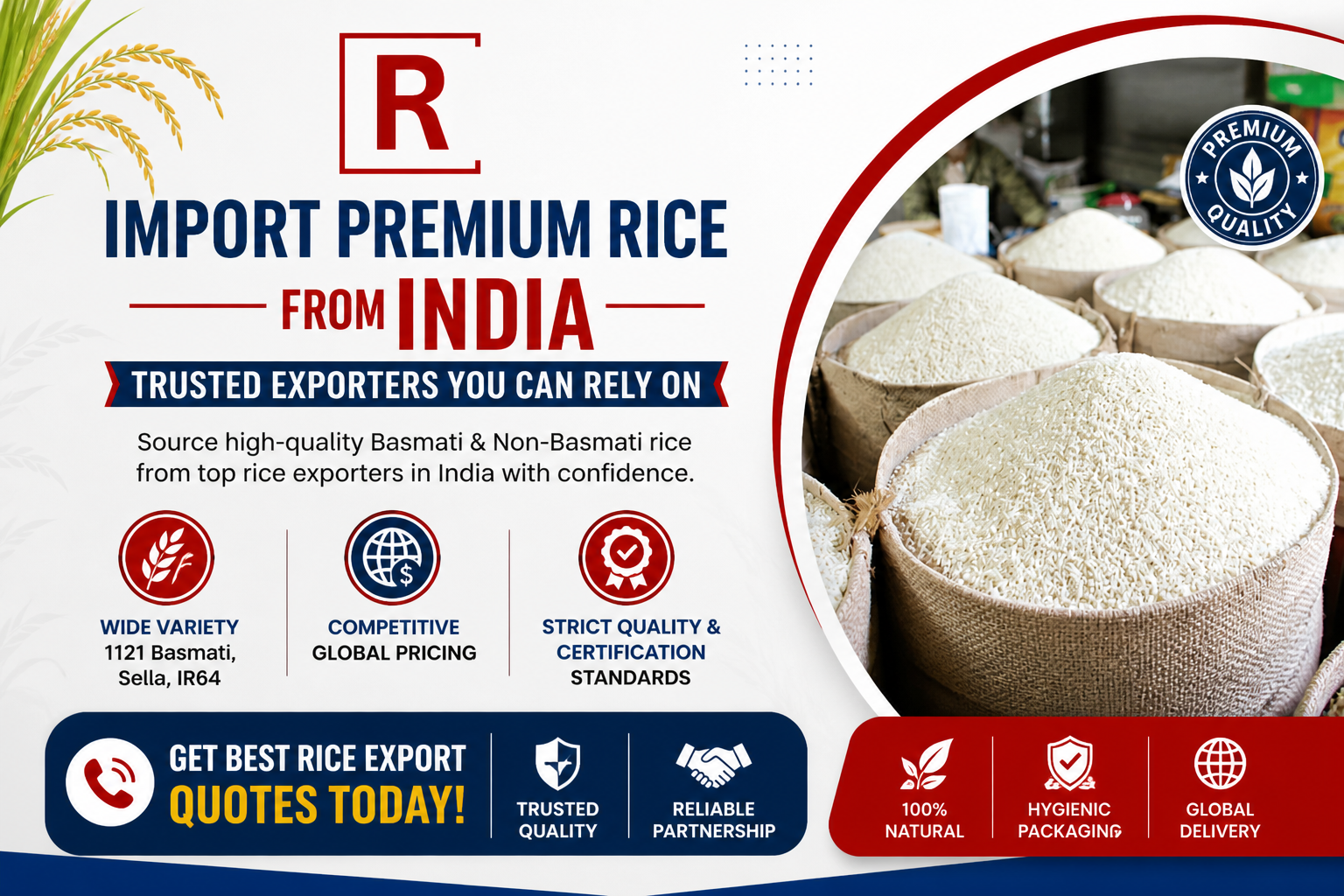
India is renowned as one of the world's largest rice-exporting nations, supplying premium-quality varieties—such as Basmati and non-Basmati—to global markets. It is also home to some of the top rice exporters in India, including trusted global suppliers like Redx Singapore, who ensure consistent quality, competitive pricing, and reliable international delivery. However, when purchasing rice from Indian exporters, simply comparing prices is not sufficient; you must also consider quality standards, certifications, logistics, and supplier reliability.
In this blog post by Redx Singapore, we will discuss the rice export process and the key factors to keep in mind when purchasing it.
Why Choose India for Rice Imports?
India maintains its dominance in the global rice export market for the following reasons:
1. Wide Variety of Rice
India boasts a diverse range of rice varieties, including Basmati rice (1121, Pusa, and Traditional), non-Basmati rice (IR64, Sona Masuri, and Ponni), and specialty rice (organic and parboiled).
2. Competitive Pricing
Indian exporters offer abundant supplies at lower production costs, resulting in better margins for buyers.
3. Robust Export Infrastructure
Indian exporters ensure consistent quality by providing modern milling, grading, and packaging facilities.
Key Factors to Consider Before Buying Rice
1. Identify the Right Rice Variety
Different markets demand different rice types.
Popular Export Choices
- 1121 Basmati Rice – Long grain, premium quality
- Sella (Parboiled) Rice – Higher shelf life
- White Rice—A budget-friendly option
Tip: Always match your market demand before placing bulk orders.
2. Check Quality Specifications
Quality directly impacts customer satisfaction and resale value.
Important Parameters
- Grain length & purity
- Broken percentage
- Moisture content (ideally <14%)
- Color & aroma
Request a sample shipment before finalizing bulk orders.
3. Verify Export Certifications
Reliable exporters always comply with international standards.
Must-Have Certifications
- FSSAI (India)
- ISO Certification
- HACCP
- APEDA Registration
These ensure food safety and export compliance.
4. Evaluate Supplier Credibility
Not all exporters offer consistent quality.
How to Check
- Years of experience
- Client testimonials
- Export countries served
- Factory or warehouse inspection
Working with trusted suppliers like Redx Singapore reduces risks.
5. Understand Pricing Structure
Rice pricing depends on:
Key Cost Factors
- Variety & grade
- Packaging type
- Order quantity
- Shipping method (FOB, CIF)
Avoid extremely low prices—they often indicate poor quality or hidden costs.
6. Choose the Right Packaging
Packaging affects product freshness and branding.
Common Options
- Jute bags (eco-friendly)
- PP bags (durable & cost-effective)
- Custom branded packaging
For retail markets, branding plays a huge role in sales.
7. Understand Logistics & Shipping
Efficient logistics ensure timely delivery.
- Choose reliable ports (e.g., Mundra, Kandla)
- Confirm shipping timelines
- Understand customs duties in your country
- FOB (Free on Board) – Buyer handles shipping
- CIF (Cost, Insurance, Freight) – Exporter handles shipping
8. Clarify Payment Terms
Secure payment terms protect your investment.
Common Payment Methods
- Letter of Credit (LC)
- Telegraphic Transfer (TT)
- Advance Payment (partial/full)
Beginners should prefer LC for safety.
9. Check Market Trends Before Buying
Rice prices fluctuate based on:
- Weather conditions
- Government export policies
- Global demand
Buying at the right time can significantly improve profit margins.
10. Build Long-Term Supplier Relationships
Consistency is key in the rice trade.
Benefits
- Better pricing over time
- Priority supply during shortages
- Customized solutions
Partnering with experienced exporters like Redx Singapore helps ensure long-term business success.
Common Mistakes to Avoid
1. Ignoring Quality Checks
Never skip lab testing or sample verification.
2. Choosing Price Over Quality
Cheap rice can damage your brand reputation.
3. Not Understanding Contracts
Always review terms related to delivery, damage, and disputes.
4. Poor Communication
Clear communication avoids costly misunderstandings.
Why Choose Redx Singapore for Rice Imports?
Trusted Global Export Partner
Redx Singapore offers the following:
- Premium quality rice sourcing
- Strict quality control processes
- Competitive export pricing
- Reliable global shipping
- Customized packaging solutions
What Sets Them Apart?
- Strong supplier network in India
- Fast and transparent communication
- End-to-end export support
Conclusion
Procuring rice from Indian exporters can prove to be a highly profitable decision, provided the process is handled correctly. When purchasing rice in bulk, it is incumbent upon you to select the appropriate variety and to thoroughly verify the credentials and certifications of the exporter you are engaging with. These seemingly minor steps can be significant contributors to the success of your business.
By adhering to the suggestions outlined in this discussion and forging partnerships with reliable exporters such as Redx Singapore, you can guarantee consistent quality, competitive pricing, and growth within your rice trading enterprise.
Looking to import high-quality rice from India with zero risk and maximum profitability?
Partner with Redx Singapore today for:
- Premium rice sourcing
- Competitive global pricing
- Reliable and timely delivery
Contact us now to get the best deals on bulk rice exports!
FAQs
Q.1. Which rice is best for export from India?
Basmati rice (especially 1121) is the most popular due to its aroma and long grains, but non-Basmati varieties are also widely exported.
Q.2. What is the minimum order quantity (MOQ)?
MOQ varies by exporter, typically ranging from 20 to 25 metric tons (1 container load).
Q. 3. How do I ensure rice quality before buying?
Always request samples, check certifications, and verify supplier credibility.
Q.4. What payment method is safest for international buyers?
A Letter of Credit (LC) is considered the safest option for large transactions.
Q.5. How long does shipping take from India?
Shipping usually takes 15–35 days, depending on destination and port.